


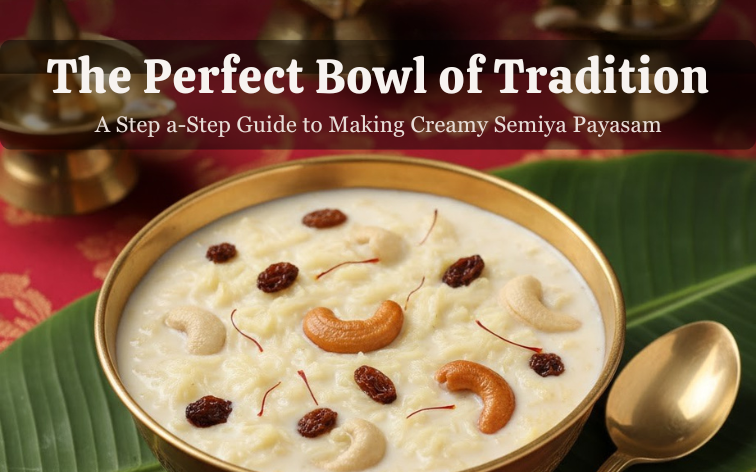
There is something deeply comforting about the aroma of roasting ghee and simmering milk that instantly transports us back to festive mornings. Whether it is a grand wedding feast or a quiet family celebration, no South Indian meal is truly complete without a serving of traditional semiya payasam. This dessert, also known as vermicelli payasam or a classic semiya kheer recipe, is the perfect example of where simplicity meets indulgence.
However, as many home cooks know, the secret to a perfect south indian semiya payasam lies in the quality of the vermicelli. Have you ever had a payasam that turned into a thick, gloopy mass after an hour? That usually happens when the vermicelli is too starchy or overcooked. At Anil Foods, we have perfected the texture of our Payasam Vermicelli to ensure every strand remains distinct, silky, and delicious, even hours after preparation.
In this guide, we will walk you through an easy semiya payasam method that guarantees a rich, creamy texture every single time.
Understanding the Semiya Payasam Ingredients
Before we dive into the preparation of semiya payasam, let’s look at what goes into this heavenly pot. For a classic semiya payasam with milk, you only need a handful of pantry staples:
- Anil Payasam Vermicelli: The star of the show. Our vermicelli is crafted to absorb the sweetness of the milk without losing its bite.
- Full-Fat Milk: This is non-negotiable for a creamy result.
- Sugar or Jaggery: While semiya payasam with sugar is the standard, many prefer the earthy depth of a jaggery semiya payasam.
- Ghee: Pure cow ghee for roasting the vermicelli and nuts.
- Nuts and Raisins: Cashews and golden raisins for that essential crunch and tang.
- Cardamom: Freshly ground pods for that unmistakable festive fragrance.
You can find all our high-quality base products on our Main Products Page.
Step-by-Step: How to Make Semiya Payasam
Step 1: Roasting the Crunch
Heat two tablespoons of ghee in a heavy-bottomed pan. Add a handful of split cashews and sauté until they turn a light golden brown. Toss in the raisins and watch them plump up like little balloons. Scoop them out and set them aside. This step is vital for a traditional semiya payasam as it infuses the ghee with a nutty aroma.
Step 2: Roasting the Vermicelli
In the same ghee-infused pan, add one cup of Anil Payasam Vermicelli. Roast on a medium flame until the vermicelli turns a beautiful golden hue. Roasting prevents the strands from becoming sticky later. If you are looking for a quick fix, you can use pre-roasted vermicelli, but a fresh roast in ghee always tastes better.
Step 3: Simmering the Milk
In a separate pot, bring one liter of full-fat milk to a gentle boil. Once it boils, lower the heat and let it simmer for about 5 to 7 minutes. This slightly reduces the milk, giving your semiya kheer recipe a richer consistency.
Step 4: Merging the Flavours
Slowly add the roasted vermicelli to the simmering milk. Stir gently to ensure no lumps form. Cook on a medium-low flame for about 8 to 10 minutes. The vermicelli should be soft and cooked through but should not disintegrate. This is the heart of the preparation of semiya payasam.
Step 5: Adding the Sweetness
Once the vermicelli is cooked, add 3/4 cup of sugar. Stir until the sugar dissolves completely. For those making a kerala semiya payasam style with jaggery, ensure you melt the jaggery separately into a syrup and add it only after turning off the heat to prevent the milk from curdling.
Step 6: The Final Touch
Add the roasted cashews, raisins, and a half-teaspoon of cardamom powder. Give it one final stir and turn off the flame. As the payasam cools, it will naturally thicken.
Variations of Semiya Payasam for Festivals
While the recipe above is the standard, different regions have their own spin on this classic. The kerala semiya payasam often includes a splash of thick coconut milk at the end for extra richness. On the other hand, the jaggery semiya payasam is a popular choice during harvest festivals like Pongal or Onam, where unrefined sugar is celebrated.
VRegardless of the variation, the goal is always a bowl of easy semiya payasam that brings a smile to your face. If you are planning a large gathering, you can easily double this semiya payasam recipe. Just make sure to buy Anil Payasam Vermicelli in bulk to ensure consistency across the batches.
Pro-Tips for the Best Vermicelli Payasam
- Consistency Control: If the payasam becomes too thick after cooling, simply stir in a half cup of warm milk before serving.
- Aromatic Secret: Adding a tiny pinch of edible camphor (pachai karpooram) at the very end can elevate your South Indian semiya payasam to temple-style quality.
- Avoid Overcooking: Always cook the vermicelli on a low flame. High heat makes the milk stick to the bottom and the vermicelli mushy.
Frequently Asked Questions (FAQs)
1. What is the best vermicelli for a semiya payasam recipe?
The best choice is a fine, non-sticky variety like Anil Payasam Vermicelli. It is specifically designed to hold its shape in milk-based desserts.
2. How to make semiya payasam without the milk curdling?
If you are making jaggery semiya payasam, always add the jaggery syrup after turning off the heat. Adding jaggery to boiling milk is the most common cause of curdling.
3. Can I make an easy semiya payasam in a pressure cooker?
While you can, it is not recommended for traditional semiya payasam. Slow simmering in an open pot allows the milk to caramelize slightly, which provides a much better flavour.
4. Why did my semiya kheer recipe turn thick like halwa?
Vermicelli continues to absorb liquid even after the heat is off. To prevent this, ensure you have a high milk-to-semiya ratio and use high-quality Anil products that don’t release excess starch.
5. Is vermicelli payasam gluten-free?
Standard vermicelli is made from wheat (semolina). For a gluten-free version, you would need to use rice-based vermicelli.
6. How long does the preparation of semiya payasam take?
Including roasting and simmering, a good easy semiya payasam takes about 20 to 25 minutes from start to finish.
7. Can I use condensed milk in semiya payasam with sugar?
Yes. If you use condensed milk, reduce the amount of regular sugar. It makes the vermicelli payasam incredibly rich and creamy.
8. What makes south indian semiya payasam different?
The key difference lies in the heavy use of ghee-roasted nuts and the specific thinness of the vermicelli used in the region.
9. Can I serve semiya payasam for festivals cold?
Absolutely. While many love it warm, semiya payasam with milk tastes excellent when chilled, almost like a vermicelli pudding.
10. Where can I buy the semiya payasam ingredients for this recipe?
You can find all essential items on the Anil Foods Shop Page.
- Consistency Control: If the payasam becomes too thick after cooling, simply stir in a half cup of warm milk before serving.
- Aromatic Secret: Adding a tiny pinch of edible camphor (pachai karpooram) at the very end can elevate your South Indian semiya payasam to temple-style quality.
- Avoid Overcooking: Always cook the vermicelli on a low flame. High heat makes the milk stick to the bottom and the vermicelli mushy.
Frequently Asked Questions (FAQs)
1. What is the best vermicelli for a semiya payasam recipe?
The best choice is a fine, non-sticky variety like Anil Payasam Vermicelli. It is specifically designed to hold its shape in milk-based desserts.
2. How to make semiya payasam without the milk curdling?
If you are making jaggery semiya payasam, always add the jaggery syrup after turning off the heat. Adding jaggery to boiling milk is the most common cause of curdling.
3. Can I make an easy semiya payasam in a pressure cooker?
While you can, it is not recommended for traditional semiya payasam. Slow simmering in an open pot allows the milk to caramelize slightly, which provides a much better flavour.
4. Why did my semiya kheer recipe turn thick like halwa?
Vermicelli continues to absorb liquid even after the heat is off. To prevent this, ensure you have a high milk-to-semiya ratio and use high-quality Anil products that don’t release excess starch.
5. Is vermicelli payasam gluten-free?
Standard vermicelli is made from wheat (semolina). For a gluten-free version, you would need to use rice-based vermicelli.
6. How long does the preparation of semiya payasam take?
Including roasting and simmering, a good easy semiya payasam takes about 20 to 25 minutes from start to finish.
7. Can I use condensed milk in semiya payasam with sugar?
Yes. If you use condensed milk, reduce the amount of regular sugar. It makes the vermicelli payasam incredibly rich and creamy.
8. What makes south indian semiya payasam different?
The key difference lies in the heavy use of ghee-roasted nuts and the specific thinness of the vermicelli used in the region.
9. Can I serve semiya payasam for festivals cold?
Absolutely. While many love it warm, semiya payasam with milk tastes excellent when chilled, almost like a vermicelli pudding.
10. Where can I buy the semiya payasam ingredients for this recipe?
You can find all essential items on the Anil Foods Shop Page.
1. What is the best vermicelli for a semiya payasam recipe?
The best choice is a fine, non-sticky variety like Anil Payasam Vermicelli. It is specifically designed to hold its shape in milk-based desserts.
2. How to make semiya payasam without the milk curdling?
If you are making jaggery semiya payasam, always add the jaggery syrup after turning off the heat. Adding jaggery to boiling milk is the most common cause of curdling.
3. Can I make an easy semiya payasam in a pressure cooker?
While you can, it is not recommended for traditional semiya payasam. Slow simmering in an open pot allows the milk to caramelize slightly, which provides a much better flavour.
4. Why did my semiya kheer recipe turn thick like halwa?
Vermicelli continues to absorb liquid even after the heat is off. To prevent this, ensure you have a high milk-to-semiya ratio and use high-quality Anil products that don’t release excess starch.
5. Is vermicelli payasam gluten-free?
Standard vermicelli is made from wheat (semolina). For a gluten-free version, you would need to use rice-based vermicelli.
6. How long does the preparation of semiya payasam take?
Including roasting and simmering, a good easy semiya payasam takes about 20 to 25 minutes from start to finish.
7. Can I use condensed milk in semiya payasam with sugar?
Yes. If you use condensed milk, reduce the amount of regular sugar. It makes the vermicelli payasam incredibly rich and creamy.
8. What makes south indian semiya payasam different?
The key difference lies in the heavy use of ghee-roasted nuts and the specific thinness of the vermicelli used in the region.
9. Can I serve semiya payasam for festivals cold?
Absolutely. While many love it warm, semiya payasam with milk tastes excellent when chilled, almost like a vermicelli pudding.
10. Where can I buy the semiya payasam ingredients for this recipe?
You can find all essential items on the Anil Foods Shop Page.